
Intermediate · Instructor-led training
Advanced Buoyancy Control
Great buoyancy is one of the most important skills a diver can develop. The Advanced Buoyancy Diver course helps certified divers refine their weighting, trim, breathing control, and underwater movement to become more comfortable, efficient, and precise in the water.
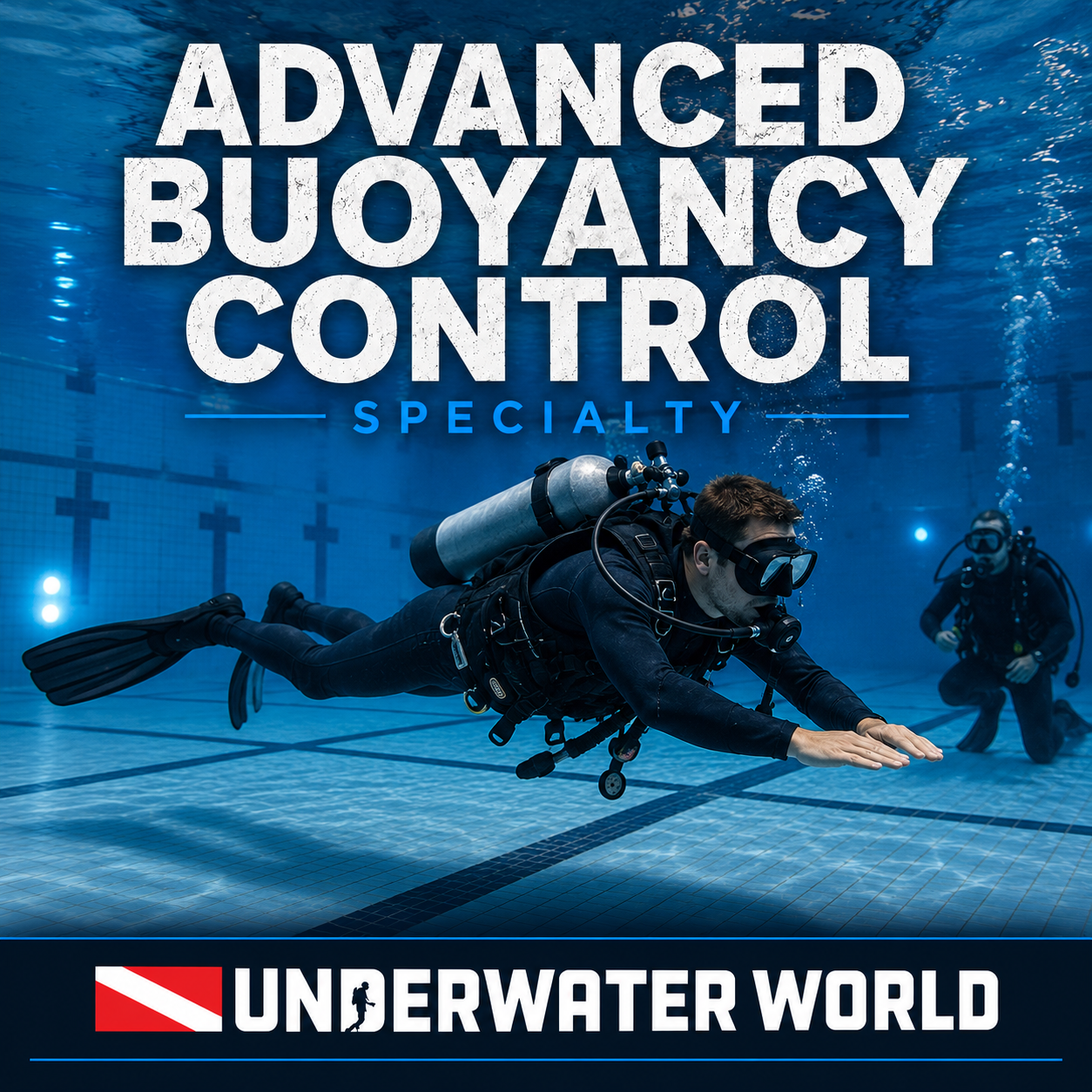
Take Control of Your Buoyancy
Great buoyancy is one of the most important skills a diver can develop. The Advanced Buoyancy Diver course helps certified divers refine their weighting, trim, breathing control, and underwater movement to become more comfortable, efficient, and precise in the water.
Course Information
What You'll Learn
This course takes a closer look at the factors that affect buoyancy and how small adjustments can significantly improve your diving.
- Proper weighting and weight distribution
- Body position and trim
- Breathing techniques for fine buoyancy control
- Effective use of your BCD or dry suit
- How exposure protection affects buoyancy
- How cylinder gas consumption changes buoyancy during a dive
- Equipment and body streamlining
- Efficient kicking and underwater movement
Skills You'll Practice
Training focuses on applying buoyancy concepts in the water and developing repeatable techniques that you can use on future dives.
- Performing accurate buoyancy checks
- Adjusting weighting and weight placement
- Controlled descents and ascents
- Maintaining a stable hover
- Fine-tuning buoyancy using breathing control
- Maintaining position without contacting the bottom
- Improving trim and swimming efficiency
- Maintaining buoyancy during a safety stop
Why Buoyancy Matters
Good buoyancy is about much more than simply staying off the bottom. Precise control can make diving easier, reduce unnecessary movement, improve air consumption, and make it easier to maintain position while observing marine life, taking photographs, or completing other underwater activities.
Better buoyancy also helps protect the underwater environment by reducing accidental contact with reefs, vegetation, and other sensitive aquatic life.
When Should I Recheck My Buoyancy?
Buoyancy and weighting can change whenever your equipment or diving environment changes. A new exposure suit, different cylinder, additional equipment, different water conditions, or a long break from diving can all affect the amount and placement of weight you need.
Developing the habit of checking and adjusting your weighting is an important part of becoming a more capable and efficient diver.
Schedule
Available dates
Next dates to be announced
Sign up below for a one-time email with the next dates and pricing.
Get new dates by emailHelpful answers
Frequently asked questions
Do I need perfect buoyancy before taking this course?
No. The purpose of the course is to help certified divers improve and fine-tune their buoyancy. You should already be a certified diver, but you do not need to have mastered these skills before beginning the course.
Can better buoyancy help my air consumption?
It can. Proper weighting, better trim, efficient movement, and reduced unnecessary effort can all contribute to more efficient breathing and gas use while diving.
Does this certification count toward SDI Advanced Diver?
Yes. The SDI Advanced Buoyancy Diver certification counts as one specialty toward the SDI Advanced Diver Development program.